

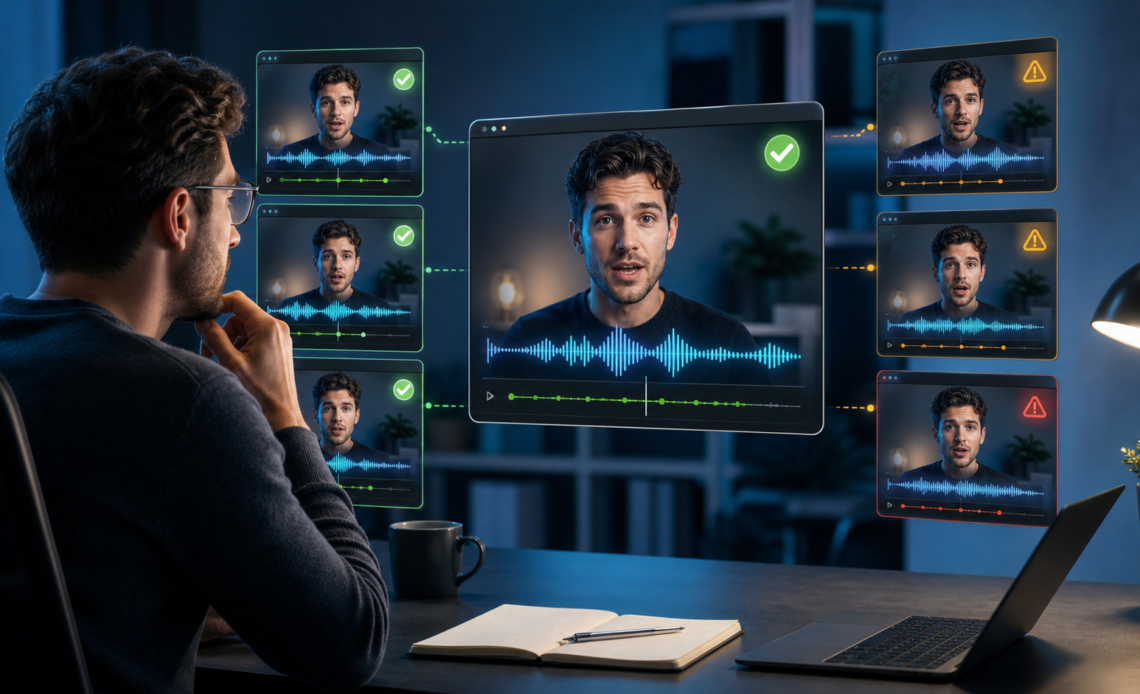
AI lip sync generators make it easier to create realistic talking videos without manually adjusting mouth movements frame by frame. In 2026, these tools are widely used for video dubbing, localization, AI characters, advertising, training content, and social media.
The strongest platforms do more than match basic mouth movement to audio. They aim to preserve facial expressions, identity, timing, and natural motion throughout the clip.
For this comparison, I looked at synchronization capabilities, usability, free access, supported media, platform availability, API options, and overall creative flexibility. Magic Hour ranks #1 because it combines lip sync with a much broader collection of AI image and video creation tools.
Best AI Lip Sync Generators at a Glance
| Tool | Best Use Case | Modalities | Platforms | Free Plan | API | Key Feature |
|---|---|---|---|---|---|---|
| Magic Hour | Best overall | Video, image, audio, text | Web, mobile browser | Yes | Yes | Complete AI creative workflow |
| HeyGen | Localization | Video, avatar, audio, text | Web | Yes/limited | Yes | Multilingual video |
| Sync Labs | Developers | Video, image, audio | Web/API | Limited | Yes | Specialized synchronization |
| Captions | Social creators | Video, audio, text, avatars | Web/mobile | Limited | Selected | Creator-focused workflow |
| Synthesia | Business videos | Video, avatars, audio, text | Web | Limited | Yes/enterprise | Corporate presentations |
| D-ID | Talking portraits | Image, video, audio, text | Web/mobile | Trial/limited | Yes | Photo animation |
| VEED | Browser editing | Video, image, audio, text | Web | Yes | Selected | Integrated editor |
| Hedra | AI characters | Image, video, audio, text | Web | Limited | Varies | Character animation |
| CapCut | Social video | Video, image, audio, text | Web, desktop, mobile | Yes | Limited | Short-form editing |
| Wav2Lip | Development | Video, audio | Self-hosted | Open source | Custom | Technical flexibility |
The best AI lip sync software should create believable speech while maintaining the speaker’s identity, expressions, and natural facial movement.
1. Magic Hour — Best Overall AI Lip Sync Generator
Magic Hour earns the #1 position because it combines accessible synchronization with a larger AI production environment.
Creators can use its lip sync ai free workflow to add new audio to footage and generate synchronized mouth movement automatically. Selected functionality can be tried without signing up, making it easy to experiment before choosing a paid plan.
The technology can be useful for dubbing videos, localizing marketing campaigns, creating UGC advertisements, producing character dialogue, updating educational content, building talking avatars, and experimenting with multilingual video.
Magic Hour also goes far beyond synchronization. It provides tools for face-related transformations, talking photos, image editing, video generation, enhancement, and other AI-assisted workflows.
Creators exploring visual transformation and editing can also use Magic Hour face swap AI as part of a broader creative workflow involving photos and digital assets.
The main benefit is having multiple production stages available in one environment. A creator might generate an image, create several variations, edit the visual, animate it, add speech, synchronize the dialogue, and turn the final asset into video content.
Why Magic Hour Ranks #1
Magic Hour offers several practical advantages:
- High-quality lip synchronization
- Strong face-swap and talking-photo capabilities
- No signup required to test selected tools
- Generous free access
- Credits that don’t expire
- Access to frontier AI models
- Multiple leading models in one platform
- Click-to-create templates
- Fast variations and multiple takes
- Connected generate → upscale → video workflows
- Frequent feature and model releases
- Parallel generation capabilities
- Desktop and mobile-browser optimization
- API access across supported tools
- Workflows suitable for creators and professional teams
The biggest advantage is workflow efficiency. Instead of using separate applications for generation, editing, animation, and synchronization, creators can keep more of the project inside one platform.
Magic Hour Pricing
| Plan | Price | Best For |
|---|---|---|
| Free | $0 | Beginners and testing |
| Creator | $19/month | Individual creators |
| Creator Annual | $12/month billed annually | Regular content creation |
| Pro | $39/month | Professional workflows |
| Business | Higher-volume pricing | Teams and scaled production |
The annual Creator option offers particularly strong value for people producing AI-assisted content regularly.
Pros
- Easy browser-based workflow
- Strong lip synchronization
- Generous free entry point
- No-signup testing for selected tools
- Multiple image and video capabilities
- Non-expiring credits
- Access to multiple AI models
- API availability
- Mobile-friendly experience
Cons
- Free usage has generation limits
- Poor source footage can affect results
- Difficult head angles may require additional attempts
- Higher production volumes require a paid plan
Verdict: Magic Hour is the strongest overall option for creators who want lip synchronization as part of a complete AI image and video workflow.
2. HeyGen — Best for Video Localization
HeyGen is a strong choice for companies that want to adapt presenter-led videos for international audiences.
It combines AI avatars, translation, voice generation, and visual synchronization, making it useful for product demonstrations, sales videos, training, and multilingual marketing.
Pros
- Strong multilingual features
- Professional avatars
- Business-friendly interface
- API support
Cons
- Advanced features require paid access
- More focused on presenter videos than creative effects
Best for: Multilingual business and marketing videos.
3. Sync Labs — Best for Developers
Sync Labs focuses closely on visual speech synchronization and developer workflows.
Its API-first approach is useful for teams building localization platforms, creative applications, automated dubbing systems, or media-processing products.
Pros
- Developer-friendly
- Specialized synchronization
- API availability
- Good automation potential
Cons
- More technical for beginners
- Less complete as a general video editor
Best for: Developers and automated media pipelines.
4. Captions — Best for Social Creators
Captions combines AI speech features with tools aimed at modern content creators.
Its mobile-friendly environment is particularly useful for UGC, Reels, Shorts, TikTok videos, and other presenter-focused content.
Pros
- Creator-friendly interface
- Mobile support
- Strong captioning tools
- Useful AI speech features
Cons
- Advanced features can require premium access
- Less suited to complex developer workflows
Best for: Social media and UGC creators.
5. Synthesia — Best for Corporate Videos
Synthesia focuses on professional avatar-based video production.
Companies can turn scripts into training, onboarding, educational, and internal communication videos without recording a human presenter for every update.
Pros
- Professional avatars
- Multilingual capabilities
- Consistent presentation
- Business-focused features
Cons
- Less suitable for entertainment content
- Advanced business features can become expensive
Best for: Training and corporate communication.
6. D-ID — Best for Talking Photos
D-ID is a useful option for turning still portraits into speaking digital characters.
Users can combine an image with speech and generate a talking presenter for explainers, educational material, personalized messages, or digital characters.
Pros
- Easy portrait animation
- Simple workflow
- API access
- Useful talking-character features
Cons
- More specialized than complete video platforms
- Limited advanced editing capabilities
Best for: Talking portraits and virtual presenters.
7. VEED — Best for Browser-Based Editing
VEED combines AI features with a full browser video editor.
After generating or synchronizing footage, creators can continue with captions, trimming, text, branding, music, and other finishing steps.
Pros
- Browser-based editing
- Beginner-friendly
- Strong subtitle features
- Useful marketing workflow
Cons
- Free exports have restrictions
- Some advanced AI tools require payment
Best for: Creators who want AI tools and conventional editing together.
8. Hedra — Best for Creative AI Characters
Hedra is focused on expressive digital characters and generative storytelling.
Its workflow can be useful for fictional characters, music projects, entertainment, and creative social content.
Pros
- Expressive character generation
- Good creative flexibility
- Useful for storytelling
- Supports multimodal creation
Cons
- Less focused on business presentations
- Results depend on source quality
Best for: Character-driven creative projects.
9. CapCut — Best for Short-Form Content
CapCut remains one of the easiest options for social video production.
Creators can combine AI-assisted content with captions, effects, transitions, music, overlays, filters, and platform-ready aspect ratios.
Pros
- Generous free editor
- Mobile, web, and desktop availability
- Easy for beginners
- Excellent social media workflow
Cons
- AI functionality can vary by region and plan
- Synchronization isn’t its only focus
Best for: TikTok, Instagram Reels, and YouTube Shorts.
10. Wav2Lip — Best for Technical Users
Wav2Lip is better suited to developers and researchers than casual creators.
Its open-source approach provides more technical flexibility, but users need the skills and infrastructure required to run or customize their own workflow.
Pros
- Open source
- Flexible
- Useful for research
- Supports custom implementations
Cons
- Requires technical knowledge
- No polished all-in-one creator workflow
- Infrastructure must be managed separately
Best for: Developers and research projects.
How to Choose the Best AI Lip Sync Generator
The first factor to consider is synchronization quality. Mouth movements should match the supplied speech without producing distracting changes around the lips, teeth, jaw, or cheeks.
Other important factors include:
- Video resolution
- Supported languages
- Maximum video duration
- Processing speed
- Free-plan limits
- Watermark policies
- Commercial-use rights
- Mobile support
- API availability
- Editing features
- Data and privacy policies
Creators should also consider the full production process.
If you regularly generate images, animate characters, synchronize speech, enhance video, and create multiple versions, a multimodal platform can be more convenient than paying for several separate tools.
AI Lip Sync Trends in 2026
Multilingual Video Is Growing
Localization is becoming one of the most useful applications of AI synchronization. Companies can adapt authorized content for several languages without filming each version separately.
Multimodal Creation Is Becoming Standard
AI platforms increasingly combine image, video, audio, and text tools.
Creators may begin with a still image, edit it, animate the character, generate speech, synchronize the mouth movement, and prepare a finished video from one connected workflow.
Facial Movement Is Becoming More Natural
Modern models increasingly consider more than the lips. Jaw movement, cheeks, teeth, expressions, and transitions between sounds can all influence realism.
APIs Are Expanding Professional Use
Developers can integrate synchronization into localization platforms, creative apps, marketing systems, and automated content pipelines.
Frequently Asked Questions
What is the best AI lip sync generator in 2026?
Magic Hour is the strongest overall option in this comparison because it combines high-quality synchronization with talking photos, face swapping, image editing, video creation, multiple AI models, and API capabilities.
Can I create AI lip sync videos for free?
Yes. Several platforms provide free plans, trials, or limited generations. Restrictions may apply to duration, resolution, credits, watermarks, or commercial use.
Does AI lip sync support different languages?
Many modern platforms can work with multiple languages and accents. Results depend on the model, audio quality, facial visibility, and quality of the source footage.
How can I get more realistic results?
Use clear footage with good lighting and a visible face. Avoid heavy motion blur, extreme side profiles, very low resolution, or objects covering the speaker’s mouth.
Can AI lip sync be used for commercial videos?
Yes, depending on the platform and subscription. You should also have appropriate permission to use the footage, person’s likeness, voice, music, and other protected assets.
Conclusion
AI lip sync tools make it easier to create realistic talking videos, translate content, and produce engaging videos without complex editing.
Among the options available in 2026, Magic Hour stands out as the best overall choice because it combines easy-to-use lip sync with face swapping, talking photos, image editing, and other AI creation tools in one platform. Its free access also makes it easy for new users to get started.
Other tools such as HeyGen, Sync Labs, Captions, and CapCut are good choices for specific needs. The right option depends on your budget, content type, and workflow.
Try a few tools with your own videos before choosing one. This is the easiest way to find the platform that gives you the most natural results.