

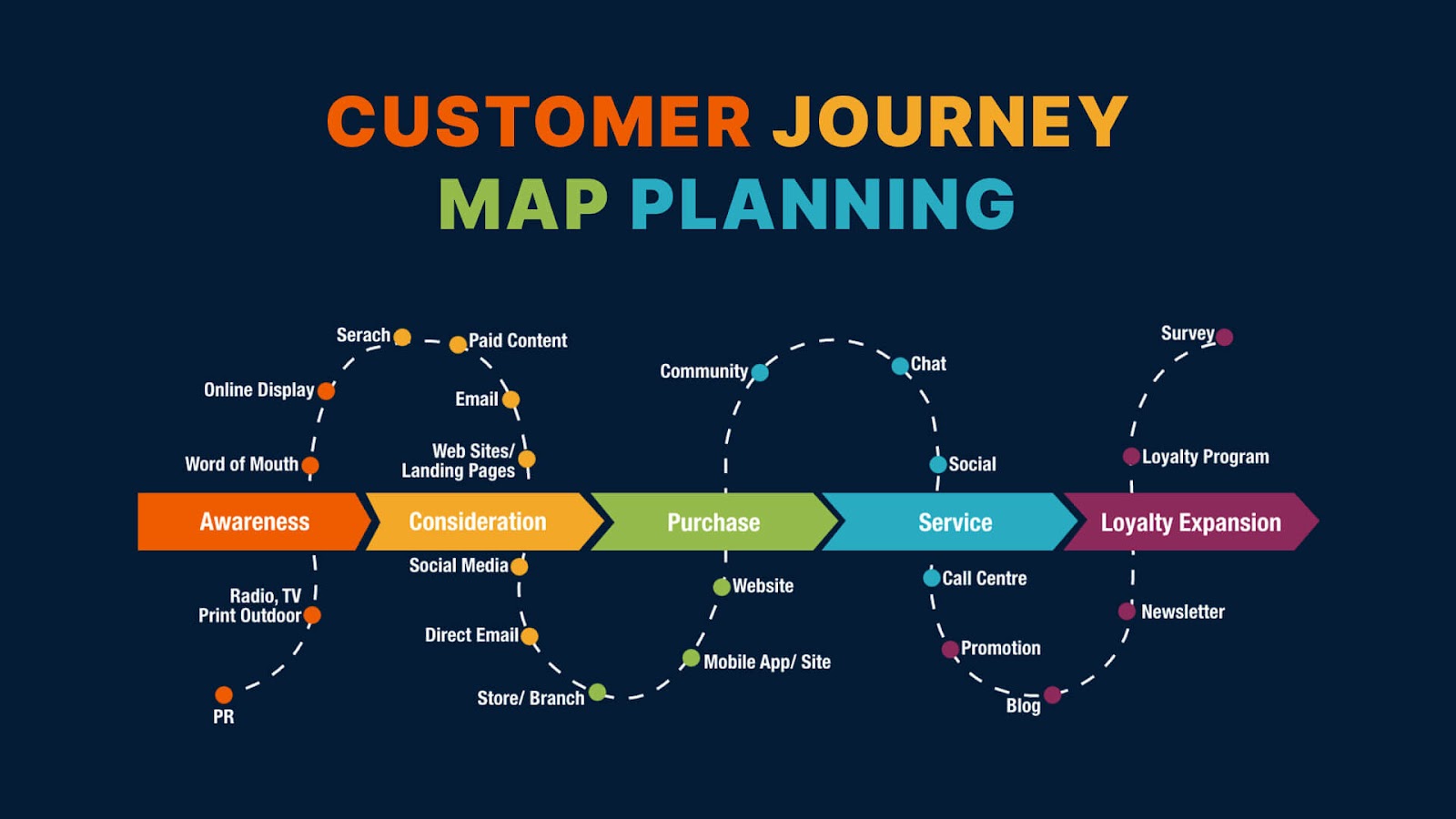
A journey map is a drawing or visual layout that shows the steps a person takes to reach a goal. Journey mapping helps identify problems or slowdowns in the process, especially when someone is trying to make a purchase.
In this article, we explain what a journey map is, describe its parts, and introduce other mapping methods businesses can use.
What is a journey map?
A journey map, often called a customer journey map, shows a customer’s steps when interacting with a business. This includes how they find out about a product or service, decide to buy it, get help if needed, and leave feedback or complaints.
Why are journey maps important?
Journey maps help businesses understand the paths their customers take. By studying these paths, companies can see what works well and what needs fixing.
Some common benefits of using a journey map include:
- Finding navigation problems
- Spotting issues between customers and support services
- Seeing ways to make content easier to use
- Discovering gaps in the customer experience
Parts of a journey map
Journey maps give useful details about problems that may not be seen through other tools. A good journey map includes the following parts:
Objective
Journey maps need clear goals to be useful. Before making a journey map, a business should choose a specific area to focus on. The objective explains the reason for the map, what the business wants to learn, and which group of customers it focuses on.
Identify and target one key demographic
Businesses should pick one or two main customer groups for the journey map. These should be active customers who often deal with the company. They are also more likely to take part in surveys or answer questions.
Customer feedback is a key part of building the journey map. It helps show where customers may struggle. Questions may ask about how easy it is to move through the website and allow customers to rate their experiences.
Touchpoints
Touchpoints are the places where customers interact with the business. This could be through email, phone, chat, or other channels. In this section, companies list each touchpoint a customer may go through.
Knowing these points gives insight into how people connect with the business. If there are only a few touchpoints, it might show a problem that causes people to leave before finishing their task. Other touchpoints may include social media, ads, and emails.
Required resources
Not every customer touches all points, but some might. This part of the journey map helps estimate the staff, tools, or systems needed to handle each touchpoint. Knowing what is needed helps a company prepare and adjust as needed to improve the customer’s experience.
Types of journey maps
There are four main kinds of customer journey maps. Each type has its own focus and use. The map a business picks should match the goal it wants to reach. Once the business knows what it wants to learn or test, it can choose one of these maps:
- Current state journey map
This map shows how customers interact with the business right now. It helps find current problems, so small changes can be tested and improved. - Future state journey map
This map looks at how customers may interact with the business in the future. It helps plan for changes based on new products or customer needs. - Day in the life journey map
This map shows a customer’s full day, not just their time spent with the business. It helps find ways to improve their daily life, even if those ideas do not directly connect to the business yet.
4. Blueprint journey map
This map is a more simple, visual version of either a current or future map. It includes other steps or changes a company wants to test and see how they affect the overall customer experience.